

The
edit
Books are a boon companion.
Stop staring at the shelves of your local bookstore – let us point you towards some of our faves.
Technology & AI
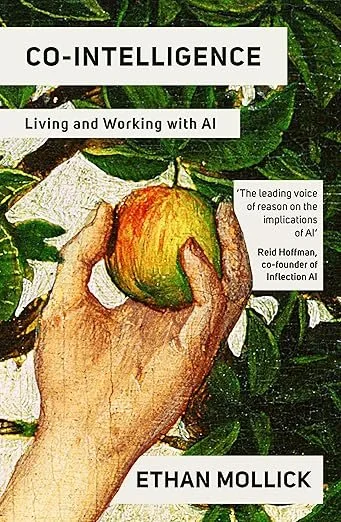
Co-Intelligence: The Definitive, Bestselling Guide to Living and Working with AI, Ethan Mollick
Consumer AI has arrived. And with it, inescapable upheaval as we grapple with what it means for our jobs, lives and the future of humanity.
Cutting through the noise of AI evangelists and AI doom-mongers, Wharton professor Ethan Mollick has become one of the most prominent and provocative explainers of AI, focusing on the practical aspects of how these new tools for thought can transform our world. In Co-Intelligence, he urges us to engage with AI as co-worker, co-teacher and coach.
Wide ranging, hugely thought-provoking and optimistic, Co-Intelligence reveals the promise and power of this new era.
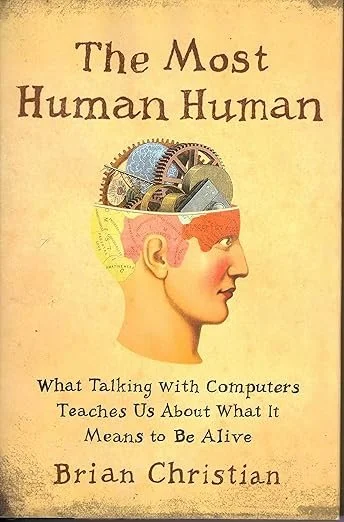
The Most Human Human: What Talking with Computers Teaches Us About What It Means to Be Alive, Brian Christian
The Most Human Human is a provocative, exuberant, and profound exploration of the ways in which computers are reshaping our ideas of what it means to be human. Its starting point is the annual Turing Test, which pits artificial intelligence programs against people to determine if computers can “think.”
Named for computer pioneer Alan Turing, the Turing Test convenes a panel of judges who pose questions — ranging anywhere from celebrity gossip to moral conundrums — to hidden contestants in an attempt to discern which is human and which is a computer. The machine that most often fools the panel wins the Most Human Computer Award. But there is also a prize, bizarre and intriguing, for the Most Human Human.
In 2008, the top AI program came short of passing the Turing Test by just one astonishing vote. In 2009, Brian Christian was chosen to participate, and he set out to make sure Homo sapiens would prevail.
The author’s quest to be deemed more human than a computer opens a window onto our own nature. Interweaving modern phenomena like customer service “chatbots” and men using programmed dialogue to pick up women in bars with insights from fields as diverse as chess, psychiatry, and the law, Brian Christian examines the philosophical, biological, and moral issues raised by the Turing Test.
One central definition of human has been “a being that could reason.” If computers can reason, what does that mean for the special place we reserve for humanity?
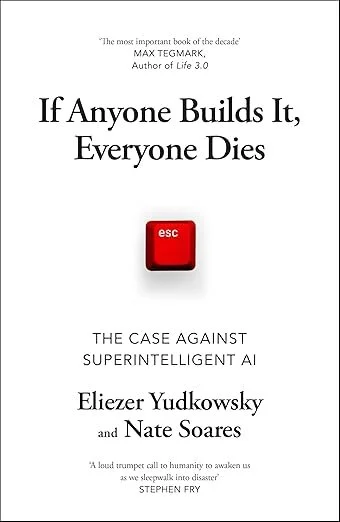
AI is the greatest threat to our existence that we have ever faced.
The scramble to create superhuman AI has put us on the path to extinction – but it’s not too late to change course. Two pioneering researchers in the field, Eliezer Yudkowsky and Nate Soares, explain why artificial superintelligence would be a global suicide bomb and call for an immediate halt to its development.
The technology may be complex, but the facts are simple: companies and countries are in a race to build machines that will be smarter than any person, and the world is devastatingly unprepared for what will come next.
Could a machine superintelligence wipe out our entire species? Would it want to? Would it want anything at all? In this urgent book, Yudkowsky and Soares explore the theory and the evidence, present one possible extinction scenario and explain what it would take for humanity to survive.
The world is racing to build something truly new – and if anyone builds it, everyone dies.
If Anyone Builds It, Everyone Dies: The Case Against Superintelligent AI, Eliezer Yudkowsky & Nate Soares
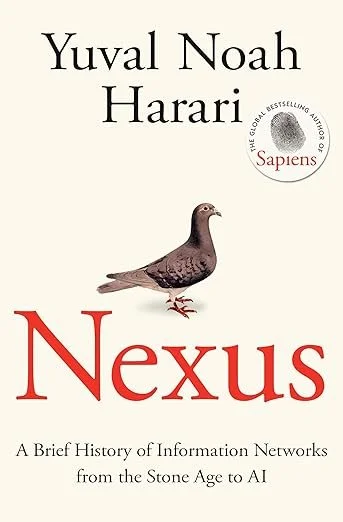
Nexus: A Brief History of Information Networks from the Stone Age to AI, Yuval Noah Harari
The story of how information networks have made, and unmade, our world from the #1 Sunday Times bestselling author of Sapiens
Stories brought us together.
Books spread our ideas – and our mythologies.
The internet promised infinite knowledge.
The algorithm learned our secrets – and then turned us against each other.
What will AI do?
NEXUS is the thrilling account of how we arrived at this moment, and the urgent choices we must now make to survive – and to thrive.
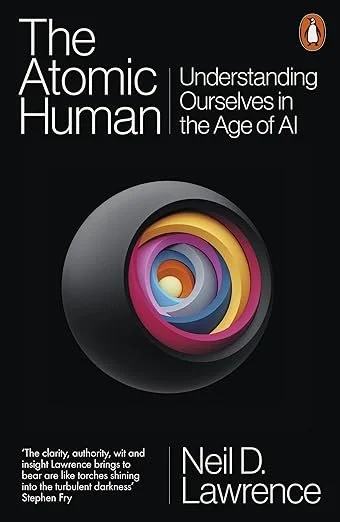
The Atomic Human: Understanding Ourselves in the Age of AI, Neil D. Lawrence
What does Artificial Intelligence mean for our identity? Our fascination with AI stems from the perceived uniqueness of human intelligence. We believe it's what differentiates us. Fears of AI not only concern how it invades our digital lives, but also the implied threat of an intelligence that displaces us from our position at the centre of the world.
Neil D. Lawrence's visionary book shows why these fears may be misplaced. Atomism, proposed by Democritus, suggested it was impossible to continue dividing matter down into ever smaller components: eventually we reach a point where a cut cannot be made (the Greek for uncuttable is 'atom'). In the same way, by slicing away at the facets of human intelligence that can be replaced by machines, AI uncovers what is left: an indivisible core that is the essence of humanity.
Human intelligence has evolved across hundreds of thousands of years. Due to our physical and cognitive constraints over that time, it is social and highly embodied. By contrasting our capabilities with machine intelligence, The Atomic Human reveals the technical origins, capabilities and limitations of AI systems, and how they should be wielded. Not just by the experts, but ordinary people. Understanding this will enable readers to choose the future we want – either one where AI is a tool for us, or where we become a tool of AI – and how to counteract the digital oligarchy to maintain the fabric of an open, fair and democratic society.
Shortlisted for the FT and Schroders Business Book of the Year
Soon you will live surrounded by AIs. In a world of quantum computers, robot assistants and abundant energy, they will organise your life, operate your business, and run government services.
None of us are prepared.
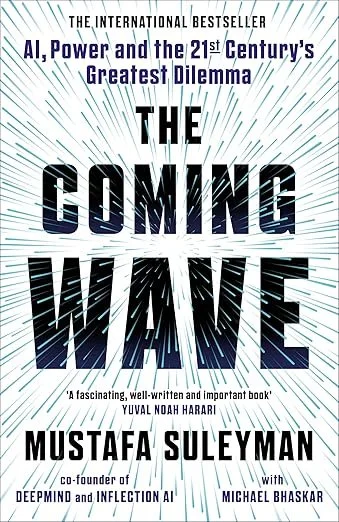
Mustafa Suleyman has been at the centre of this revolution. The next decade, he explains, will be defined by a wave of powerful, fast-proliferating new technologies. These will create immense prosperity but also present risks.
How do we ensure the flourishing of humankind? How do we maintain control over these technologies? And how do we find the narrow path to a successful future? In this groundbreaking book we learn how to think about the essential challenge of our age.
Be prepared. Read The Coming Wave.
The Coming Wave: AI, Power and Our Future, Michael Bhaskar & Mustafa Suleyman
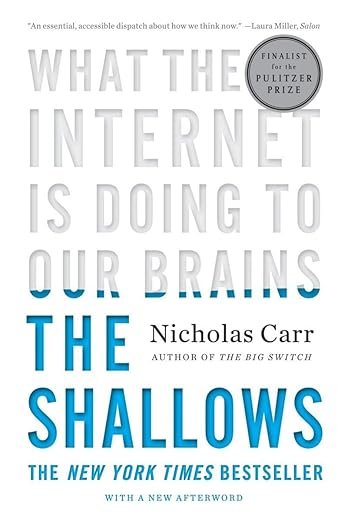
The Shallows – What the Internet Is Doing to Our Brains, Nicholas Carr
A scientifically grounded look at how constant online exposure is reshaping our brains and attention spans.
The best-selling author of The Big Switch returns with an explosive look at technology’s effect on the mind. “Is Google making us stupid?” When Nicholas Carr posed that question, in a celebrated Atlantic Monthly cover story, he tapped into a well of anxiety about how the Internet is changing us. He also crystallized one of the most important debates of our time: As we enjoy the Net’s bounties, are we sacrificing our ability to read and think deeply?
Now, Carr expands his argument into the most compelling exploration of the Internet’s intellectual and cultural consequences yet published. As he describes how human thought has been shaped through the centuries by “tools of the mind” — from the alphabet to maps, to the printing press, the clock, and the computer — Carr interweaves a fascinating account of recent discoveries in neuroscience by such pioneers as Michael Merzenich and Eric Kandel. Our brains, the historical and scientific evidence reveals, change in response to our experiences. The technologies we use to find, store, and share information can literally reroute our neural pathways.
Building on the insights of thinkers from Plato to McLuhan, Carr makes a convincing case that every information technology carries an intellectual ethic — a set of assumptions about the nature of knowledge and intelligence. He explains how the printed book served to focus our attention, promoting deep and creative thought. In stark contrast, the Internet encourages the rapid, distracted sampling of small bits of information from many sources. Its ethic is that of the industrialist, an ethic of speed and efficiency, of optimized production and consumption — and now the Net is remaking us in its own image. We are becoming ever more adept at scanning and skimming, but what we are losing is our capacity for concentration, contemplation, and reflection.
Part intellectual history, part popular science, and part cultural criticism, this is a book that will forever alter the way we think about media and our minds.
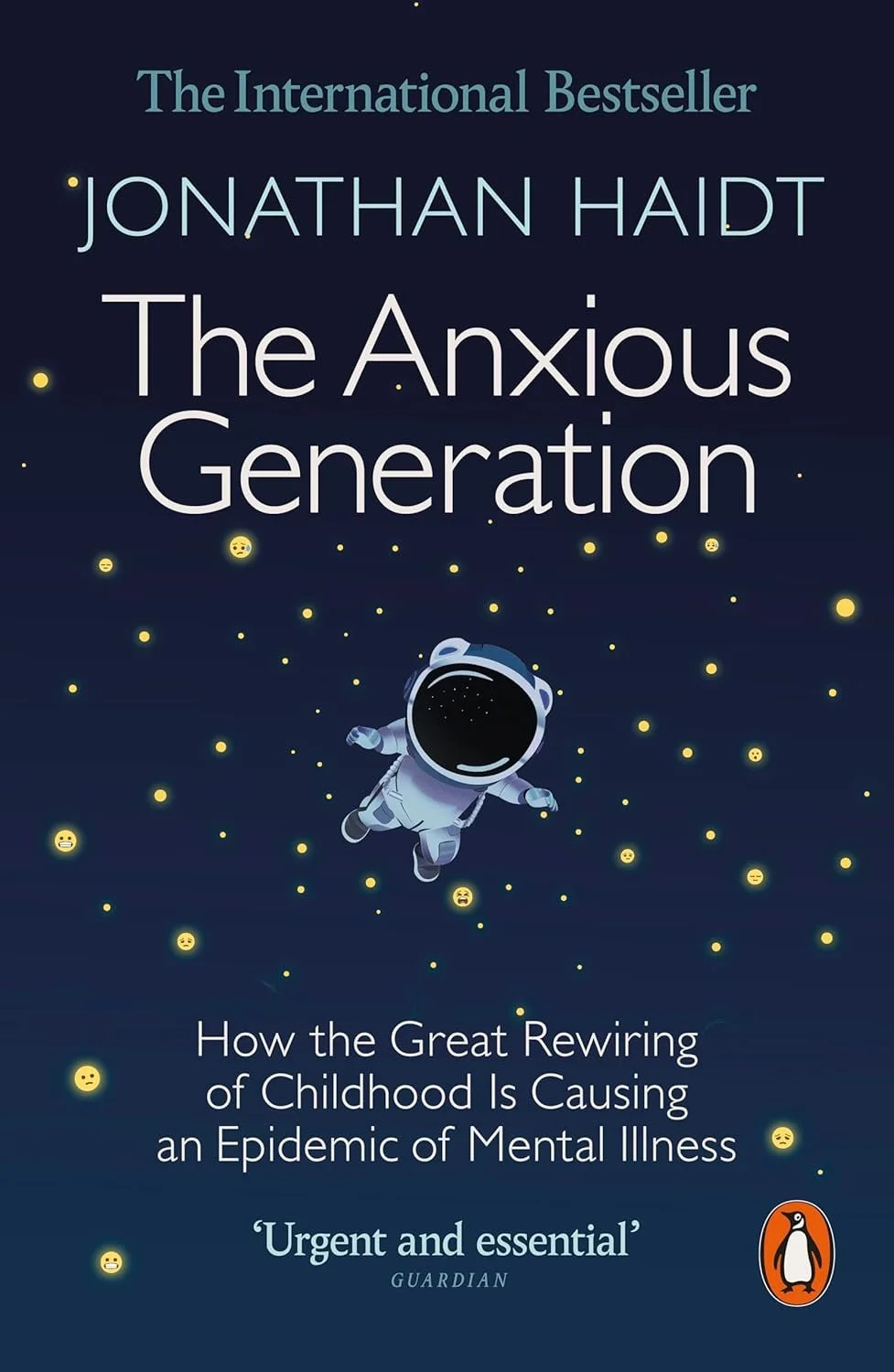
The Anxious Generation: How the Great Rewiring of Childhood Is Causing an Epidemic of Mental Illness,
Jonathan Haidt
Acclaimed psychologist Jonathan Haidt reveals how the decline of free-play in childhood and the rise of smartphone use among adolescents is changing our world.
From 2010, as teens traded in their flip phones for smartphones packed with social media apps, unsupervised time online soared while face-to-face conversations with friends and family plummeted, and so did mental health. This profound shift took place against a backdrop of diminishing childhood freedom and over-supervision in the real world, depriving children of the experiences they most need to become strong and self-governing adults.
The Anxious Generation delves into the latest research to show how this shift from free-play to smartphones disrupts development – from sleep deprivation to addiction – and lays the foundations of isolation and fear that define society today. Grounded in ancient wisdom and packed full of cutting-edge science and practical advice, this eye-opening book is a life-raft for anyone who wants to understand how the most rapid rewiring of human relationships and consciousness in human history has made it harder for all of us to think, focus, forget ourselves enough to care about others and build close relationships.
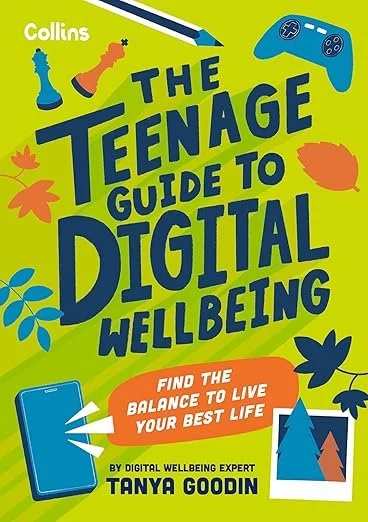
The Teenage Guide to Digital Wellbeing, Tanya Goodin
Learn Healthy Tech Habits, Overcome Online Distractions, and Stay Safe on the Internet with This Essential Guide for Teens
Digital wellbeing is all about finding the balance between the digital world and the real world – and making sure we use smartphones and other digital devices in a healthy way, while living fulfilling lives beyond the screen.
This guide helps tweens and teens do exactly that, inspiring them to set their devices aside (sometimes anyway!) and start living in the here and now.
Written by digital wellbeing expert Tanya Goodin, it’s packed with positive prompts, thought-provoking science, and hands-on activities to encourage healthy habits around screen use – including nostalgic crafts, retro tech scavenger hunts, and phone-free nature excursions, plus practical tips on how to deal with digital challenges like comparison culture, cyberbullying, trolling, and much more.
This book is not about teenagers giving up their devices forever; it’s about being more mindful of how they use them, so they can live their best lives – on and off the screen.
Teenagers will discover how to:
Develop healthy habits, identify priorities, and set achievable goals
Know their own screen limits and deal with digital distractions
Stay safe and savvy on the internet
Focus on the positive and productive uses of smartphones (no more doom-scrolling!)
Combat comparison culture on social media and quieten their inner critics
Nurture friendships and family relationships offline and on
Build resilience and self-confidence to live healthily and happily with their digital devices
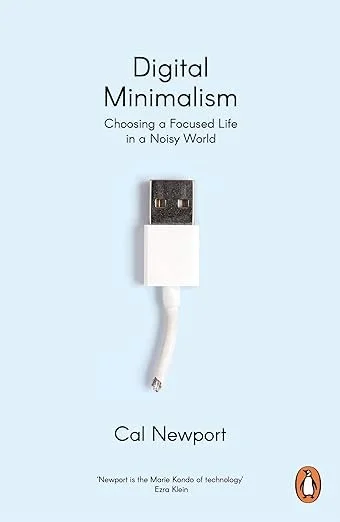
Digital Minimalism: Choosing a Focused Life in a Noisy World, Cal Newport
An argument for intentionally using tech only where it serves meaningful values and goals.
Newport outlines a 30-day digital declutter plan to help cut out non-essential apps and reconnect with what truly matters.
Do you find yourself endlessly scrolling through social media or the news while your anxiety rises? Are you feeling frazzled after a long day of endless video calls?
In this timely book, professor Cal Newport shows us how to pair back digital distractions and live a more meaningful life with less technology.
By following a 'digital declutter' process, you'll learn to:
· Rethink your relationship with social media
· Prioritize 'high bandwidth' conversations over low quality text chains
· Rediscover the pleasures of the offline world
Take back control from your devices and find calm amongst the chaos with Digital Minimalism.
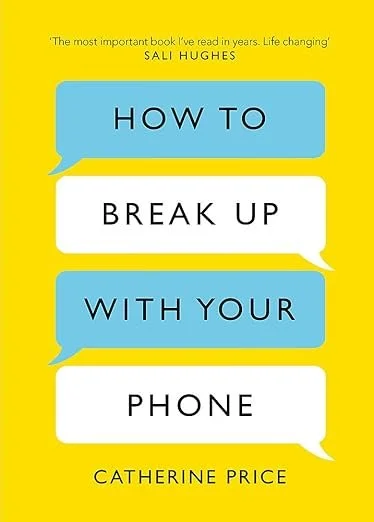
How to Break Up With Your Phone: The 30-Day Plan to Take Back Your Life, Catherine Price
A practical and user-friendly 30-day roadmap to reduce phone dependency. It includes insights into how smartphones hijack our attention and tips for creating healthier habits — like setting phone-free zones or modifying settings.
Is your phone the first thing you reach for when you wake up? And the last thing you see before you sleep? Do you find the hours slip away as you idly scroll through your social media timeline?
In short, are you addicted to your phone?
If so, How to Break Up with Your Phone is here to help.
How to Break Up With Your Phone is a smart, practical and useful plan to help you conquer your mobile phone addiction in just 30 days — and take back your life in the process.
Recent studies have shown that spending extended time on our phones affects our ability to form new memories, think deeply, focus and absorb information, and the hormones triggered every time we hear our phones buzz both add to our stress levels and are the hallmark signs of addiction. In How to Break Up with Your Phone, award-winning science journalist Catherine Price explores the effects that our constant connectivity is having on our brains, bodies, relationships, and society at large and asks, how much time do you really want to spend on your phone?
Over the course of 30 days, Catherine will guide you through an easy-to-follow plan that enables you to identify your goals, priorities and bad habits, tidy your apps, prune your email, and take time away. Lastly, you will create a new, healthier relationship with your phone and establish habits and routines to ensure this new relationship sticks.
You don't have to give up your phone forever; instead you will be more mindful not only of how you use your phone, but also about how you choose to spend the precious moments of your life.
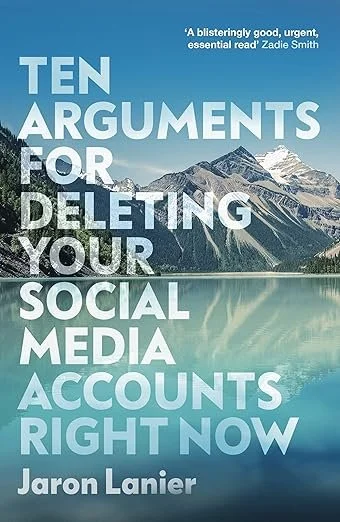
Ten Arguments For Deleting Your Social Media Accounts Right Now, Jaron Lanier
A bold critique of social media’s architecture and psychological manipulation, urging readers to rethink why—and how—they stay connected.
The evidence suggests that social media is making us sadder, angrier, less empathetic, more fearful, more isolated and more tribal.
Jaron Lanier is the world-famous Silicon Valley scientist-pioneer who first alerted us to the dangers of social media. In this witty and urgent manifesto he explains why its toxic effects are at the heart of its design, and, in ten simple arguments, why liberating yourself from its hold will transform your life and the world for the better.
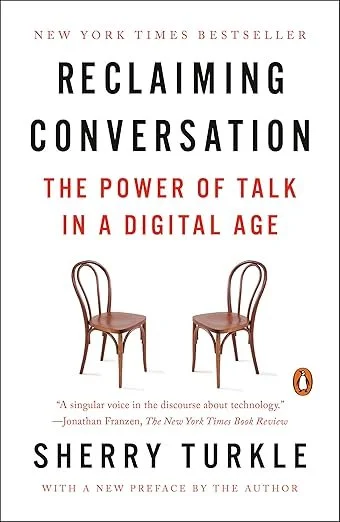
Reclaiming Conversation: The Power of Talk in a Digital Age, Sherry Turkle
Explores how technology has compromised face-to-face communication and empathy, and how genuine conversations can be reclaimed.
Sherry Turkle, long an enthusiast for the promise of digital technology, now investigates its troubling consequence: at work, at home, in politics, and in love, we have sacrificed conversation for mere connection. At the dinner table, children compete with phones for their parents’ attention. At work, we retreat to our screens and home offices, forgoing the water-cooler conversation that once made us more productive and engaged. Online, we post opinions that our friends will agree with, avoiding the real conflicts and solutions of the public square. When we turn to our devices instead of to one another, the cost is our own humanity.
But there is good news: conversation cures. Face-to-face dialogue builds empathy, friendship, and creativity; it’s the cornerstone of democracy and good for the bottom line. Drawing on five years of research and interviews in homes, schools, and the workplace, Turkle makes the paradigm-shifting case for conversation.
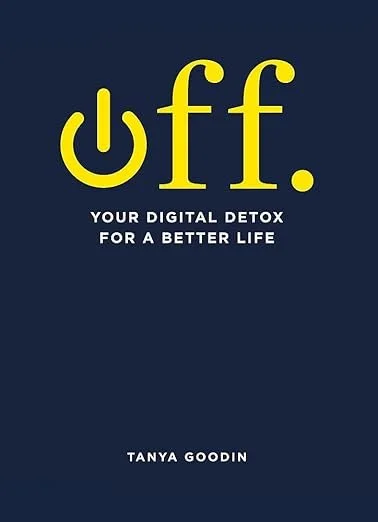
OFF. Your Digital Detox for a Better Life, Tanya Goodin
A pocket guide filled with practical exercises to help you switch off, reduce anxiety, and re-engage with life beyond the screen.
Lost without your phone? Exhausted? Unable to relax or focus? We tap, swipe and click on our devices 2,617 times per day. We spend more time online than we do asleep. With so many ways to stay connected, procrastinate and distract yourself, it's not easy to let go.
This canny little bible will help you log off and wake up to less stress and more time. Enjoy real experiences, real connections and real happiness.
Reset your boundaries with carefully crafted exercises, new outlooks and wise words from Tanya Goodin, digital detox specialist and founder of Time To Log Off.
Explore By Theme
Visit our shopfront at Bookshop.org