
The
edit
Books are a boon companion.
Stop staring at the shelves of your local bookstore – let us point you towards some of our favourites in Self help and Smart thinking.
Explore By Theme
What We’re Reading Now
i eat the stars: how to live fully and beautifully in a collapsing world, Sarah Wilson

Do you ever find yourself asking, "What on earth is happening to the world?"I know I do, despite my eternal optimism. So it was wonderful to attend a talk by Sarah Wilson in London last month, having just finished her latest book, ‘I Eat the Stars.’.
I've been a long-time admirer of Sarah's work — for the depth of her research and the catharsis I find in her words.
The premise of ‘I Eat the Stars’ is both confronting and strangely reassuring: we aren't simply living through a series of unrelated crises. We're witnessing the collapse of complex systems.
Climate crisis. Rising authoritarianism. AI disruption. Economic inequality. Political instability. Social fragmentation.
It can feel like everything is happening all at once because, in many ways, it is.
Drawing on conversations with more than 200 philosophers, scientists, economists, historians, poets and spiritual leaders, Sarah puts language to something many of us have sensed but struggled to articulate: that something is deeply, structurally wrong with the systems we've built.
One chapter that particularly stayed with me explored the concept of "Moloch" — the idea that so much of what we're participating in, or calling “innovation" or "evolution", is actually a collective race to the bottom, where so much is destroyed under the guise of progress.
We see Moloch everywhere:
• Algorithms optimised for attention rather than value.
• Growth pursued at any cost.
• AI advancement without fully reckoning with its human and environmental consequences.
• Consumerism fuelled by endless comparison and overconsumption.
• Political systems incentivising division over collaboration.
But surprisingly, this isn't a book about despair. It's a book about agency.
The real problem Sarah is addressing isn't the state of the world — it's our paralysis in the face of it.
We might search for villains to blame, but in reality, this moment belongs to all of us. We all play a role.
She likens humanity to adolescence: we've built incredible things without fully understanding the consequences. The next chapter of our story requires us to grow up — to take responsibility, reclaim our agency, and consciously choose how we want to shape what comes next.
It also raises an important leadership question:
If growth-at-all-costs is part of the problem, what does responsible leadership look like today — and into the future?
Perhaps the future isn't about pursuing more growth, but creating more meaningful, reparative progress.
‘I Eat the Stars’ is incredibly well researched, thought-provoking, and at times deeply uncomfortable to read. But ultimately, it's about living fully — "the great homecoming", as Sarah calls it.
I'd highly recommend it to anyone trying to make sense of the complexity of the world we're living in — and how to respond without losing their humanity (or their mind!).
A timely read.
Jacqui x
Start With Yourself, Emma Grede
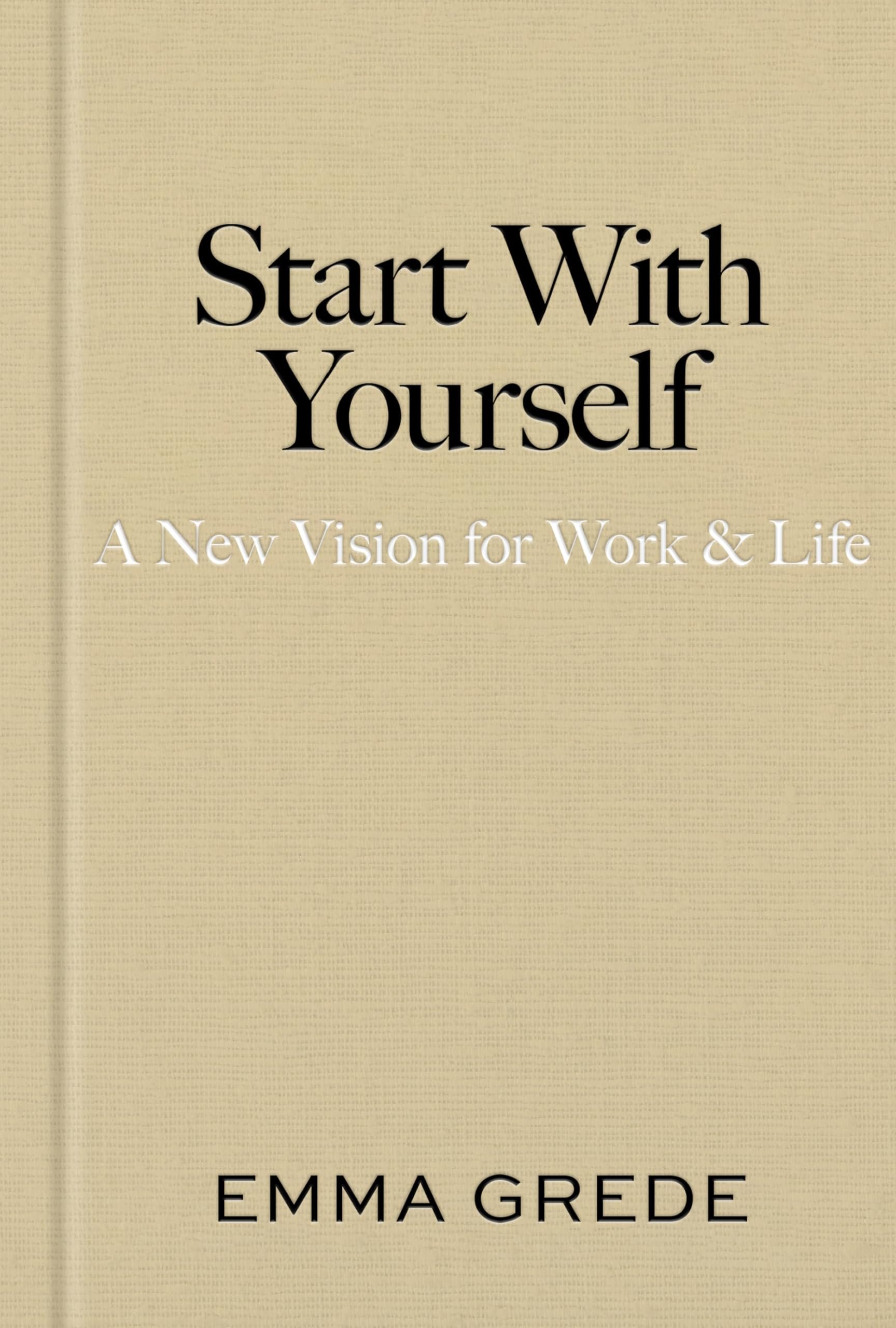
No one would have expected Emma Grede to get to where she has today: one of the world’s richest self-made women, a serial entrepreneur, cofounder and CEO of Good American and the founding partner of SKIMS, podcaster and mentor.
But Emma believes in opening the door to show you exactly how to achieve your goals, too.
A revolutionary new framework, this book is an indispensable manual for building the life you deserve. In this practical structure, Emma shows that by dispensing with old thoughts and replacing them with new thoughts you can unlock the life you've always dreamed of.
We had the pleasure of meeting Emma Grede this month following a talk she gave at Soho House, and found her to be incredibly engaging, authentic, and full of wisdom. So we cannot wait to tuck into her new book Start With Yourself which promises to be an inspiring, practical, and down-to-earth guide to live by - particularly when it comes to navigating life and work. But it all starts with self-responsibility… so start with yourself!
We’ll be sure to report back once we’re done with this promising read.
New and Noteworthy
Facing Madame X, Jamie Rose
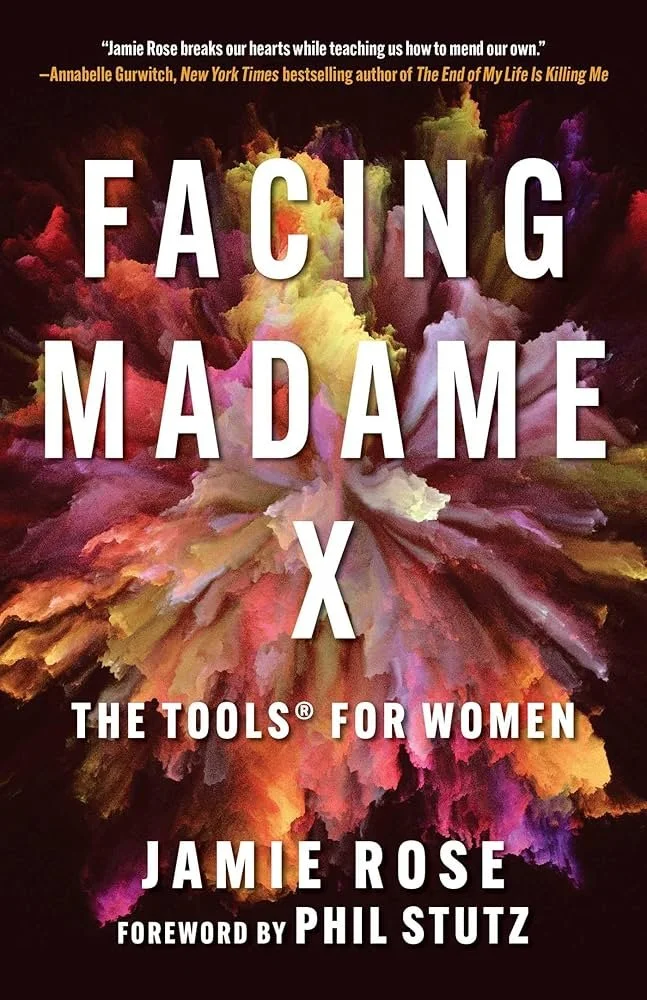
Jamie Rose is an author and coach mentored by legendary therapist Phil Stutz, the New York Times bestselling co-author of The Tools, and subject of the hit Netflix documentary, Stutz. Now, Rose brings a woman’s perspective to his work with Facing Madame X: The Tools for Women.
One of Stutz’s main teachings is that everyone has an inner enemy called “Part X”—the voice that says you’re not enough, and you’ll never succeed, so don’t even try. For women, these messages are made more potent by a patriarchy that declares that they’re not pretty, thin, young, smart, or polite as they could or should be. Rose labels the specifically pernicious way this “X” force attacks women as “Madame X.”
Facing Madame X teaches readers how to identify and neutralize the inner saboteur that has suppressed, disconnected, or overpowered their potential. Through case studies of her clients and her own personal journey, Rose helps women to hear and trust their inner voice and connect to the archetypical spirit that is their birthright—the divine feminine—a powerful, creatively benevolent force that will help them reach their full, uniquely beautiful potential and create the life that always felt just beyond their grasp.
What To Make Of A Life, Jim Collins

Jim Collins, international bestselling author of Good to Great, offers transformative lessons on constructing — and reconstructing — a life through the cliff moments and transitions we all will face repeatedly in our lives.
Explore By Theme
Visit our Shopfront at Bookshop.org